A Brief History of the Pretzel
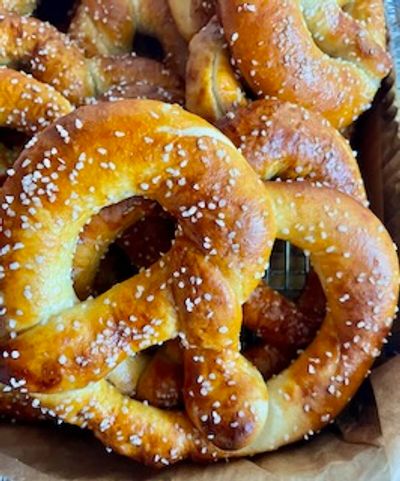
The pretzel is one of the world’s oldest snack foods, with a history that dates back more than 1,400 years. Most historians trace its origins to early Christian communities in Europe around the 6th or 7th century. According to tradition, monks baked strips of dough and folded them into a shape resembling crossed arms in prayer, rewarding children with these simple breads for learning their prayers. The Latin word pretiola, meaning “little reward,” is often cited as the root of the word “pretzel.”
Pretzels spread throughout southern Germany, Austria, and northern Italy, where they became closely associated with Lent because they were made from simple ingredients—flour, water, and salt—permitted during fasting periods. By the Middle Ages, pretzels were commonly depicted in religious artwork and were symbols of good luck, prosperity, and spiritual wholeness. Bakers’ guilds adopted the pretzel as an emblem, a tradition that continues today in many European bakeries.
German immigrants brought pretzels to North America in the 18th century, particularly to Pennsylvania. There, the snack took on new life, evolving into both soft and hard varieties. Pennsylvania became the center of the American pretzel industry, especially after the 19th-century invention of hard pretzels, which had a longer shelf life and could be widely distributed.
Today, pretzels are enjoyed around the world in countless forms—soft, hard, sweet, savory, and filled—while still retaining their distinctive twisted shape. From their humble beginnings as a simple bread to their status as a beloved global snack, pretzels remain a symbol of tradition, craftsmanship, and comfort food.
Food for Thought
https://www.mentalfloss.com/food/pretzel-food-history
https://www.historyoasis.com/post/history-pretzels
https://artandtheology.org/2016/02/29/praying-with-pretzels/
https://www.mashed.com/905777/the-unexpected-connection-between-pretzels-and-religion/
https://www.foodandwine.com/lifestyle/religious-history-pretzels
https://www.history.com/articles/the-pretzel-a-twisted-history